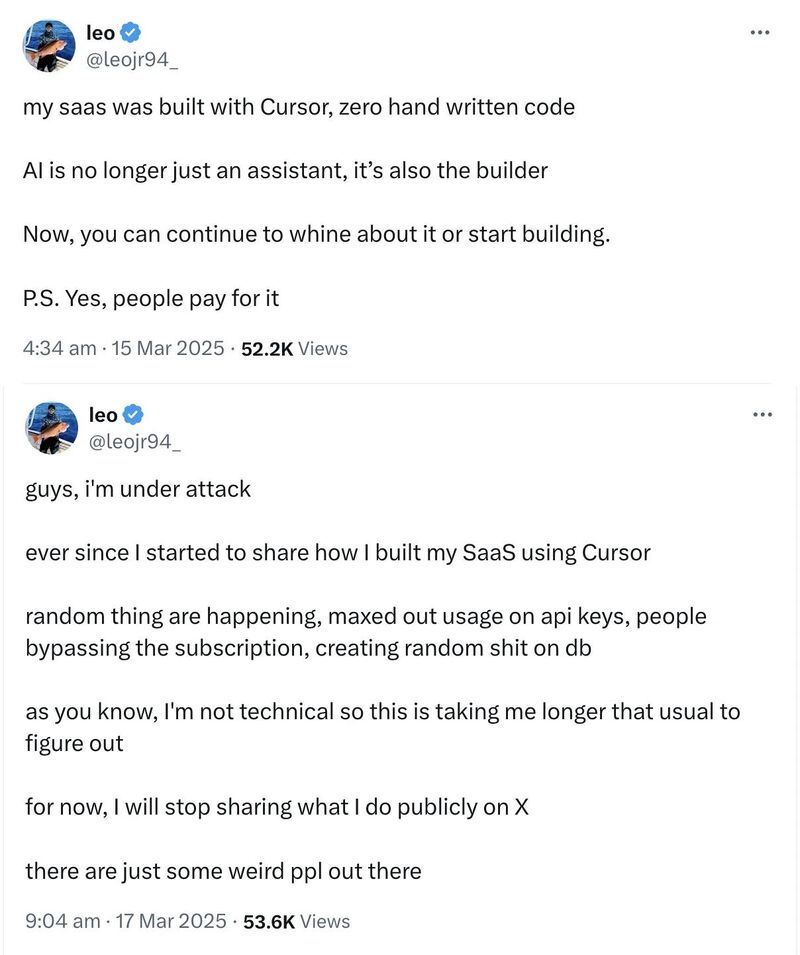
There was a viral post on Twitter recently where someone proudly showcased a SaaS product they had built using an AI-powered coding tool called Cursor. It looked like a success story in the making—fast execution, working product, lots of engagement.
Then, just a few days later, that same person was back on Twitter, clearly in panic mode:
“I’m under attack.”
Their API usage had maxed out. Users were bypassing subscription limits. And the developer admitted they weren’t a technical person and had no idea how to fix any of it.
This is a textbook example of what I call Vibe Coding—using AI tools to write software without understanding what’s really happening under the hood.
What Is Vibe Coding?
Vibe Coding is when someone relies on AI to generate code while lacking a solid grasp of the language, framework, or system they’re working with. The code might work—for a while—but the developer doesn’t actually know how or why. That might seem harmless at first, but it often leads to serious issues down the road.
Why It Fails (Fast)
1. Inefficient, bloated code
AI tools can produce code that looks right but isn’t optimal. If you don’t know better, you’ll end up with slow, over-complicated solutions that are hard to maintain or scale.
2. No meaningful growth
Every skilled developer has gone through the cycle of writing bad code, breaking things, fixing them, and learning. That struggle is what builds real skill. If you skip that, you stay stuck at surface-level knowledge.
3. Endless bug loops
You fix one thing, and something else breaks. This spiral is common when you don’t truly understand what the code is doing—and AI still makes mistakes. If you can’t spot them, you’re in trouble.
4. Passive thinking
The biggest danger is relying on AI so much that you stop thinking critically. You become a passenger in your own development process. That’s how we end up with misguided hot takes like “AI will replace programmers” or “coding is dead.”
The Smarter Way to Use AI
The solution isn’t to avoid AI tools—it’s to use them wisely. And that starts with learning the fundamentals.
Before you build with AI, take time to understand the basics of the language or framework you’re working with. Follow tutorials, and don’t just watch—code along. That hands-on practice helps you build confidence and muscle memory.
Once you’ve got a foundation, AI becomes a powerful assistant instead of a risky shortcut. You’ll be able to spot flaws, fix bugs, and actually understand the thing you’re building. Now you’re in control—and that’s when you’ll build great software, not just fast software.
Final Thought
Tech is evolving fast. AI is incredible. But speed doesn’t replace understanding. If you want to build things that last—and grow as a developer along the way—don’t just vibe. Learn, think, and build with intention.
Signing off.